

How to Use Heat Transfer Reflective Tape Correctly?
2024-06-12
YSM
YSMLITE
Heat transfer reflective tape is a high-performance reflective material made by heat transfer process. It is widely used in traffic safety, clothing, advertising signs and other fields. As a professional reflective material manufacturer, YSM has accumulated rich experience in the research and development and production of reflective tapes over the years.
Heat transfer reflective tape has high reflectivity, weather resistance and excellent bonding performance. According to data from a well-known material laboratory, the reflectivity of high-quality reflective tape under lighting conditions can be as high as 95% or more. Therefore, whether it is used for safety signs or advertising, it can play a significant role.
What is heat transfer reflective tape? ——Principle and Advantage Interpretation
Heat transfer reflective tape mainly relies on heat transfer technology to transfer reflective materials to the surface of the substrate. This process ensures the clarity and durability of the pattern, while taking into account the characteristics of bright colors and waterproof and anti-fading. The following is a brief introduction to its working principle and main advantages:
Working principle
- Using the heat transfer process, special pigments and reflective particles are evenly integrated into the tape surface at high temperature.
- During the pressing and cooling process, ensure that the pattern is firmly attached and not easy to fall off.
- By adjusting the temperature and pressure, the requirements of different materials and uses can be met.
Main advantages
- High reflectivity: Experimental data show that the reflectivity of high-quality products reaches more than 95%.
- Strong weather resistance: It can resist ultraviolet rays and rain erosion, and is suitable for various complex outdoor environments.
- Easy installation: When using, just clean the base surface, tear off the adhesive, and you can paste it.
- Environmentally friendly materials: The production process meets environmental protection standards and conforms to the modern green manufacturing concept.
Through the above analysis, we can see that heat transfer reflective tape is not only technically mature, but also has obvious product advantages and is suitable for a variety of scenarios.
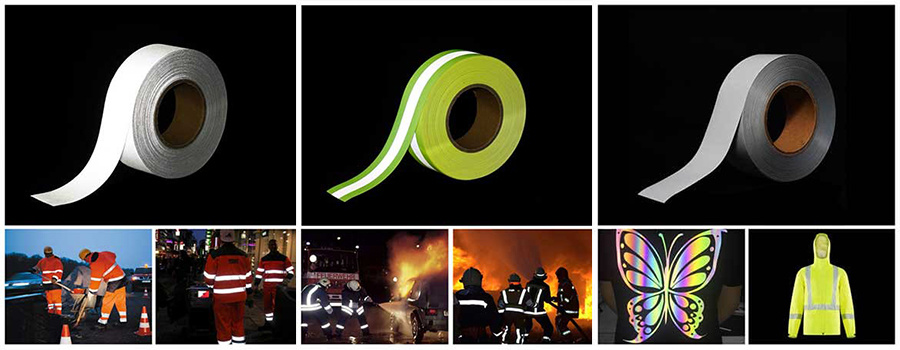
How to use reflective heat transfer vinyl tape? ——Detailed operation steps
Correct use of heat transfer reflective tape can maximize its reflective effect and durability. The following is a set of detailed operation steps, with professional tool recommendations and specific precautions:
Preparation
- Clean the work surface: Make sure there is no dust, oil or water stains on the surface to be pasted. You can use alcohol or detergent to wipe it.
- Tool preparation: It is recommended to prepare scissors, scrapers, heat guns (optional) and measuring tools to ensure accurate operation.
Step 1: Measurement and cutting
- Measure the size to be pasted according to actual needs and mark it on the tape.
- Use scissors or professional cutting tools to cut the tape into the required size and ensure that the edges are flat.
Step 2: Surface treatment and preheating
- Use a scraper to gently scrape the surface to be pasted to remove small particles that may affect the adhesion.
- For some materials, it is recommended to use a heat gun to slightly preheat the bottom of the tape to enhance the adhesion, but be careful not to overheat to avoid affecting the reflective effect.
Step 3: Paste and flatten
- After tearing off the protective paper on the back, align the tape and stick it on.
- Use a scraper to push from the center outward to ensure that there are no bubbles and let the tape fit tightly to the surface.
- In case of curved or uneven surfaces, you can adjust it by light pressure with your hands, and use a heat gun to heat it locally again to achieve better adhesion.
Step 4: Curing and testing
- After pasting, let the tape sit for several hours to ensure that the glue is completely cured.
- Finally, the reflective effect can be tested with strong light to ensure that it meets safety standards.
Tips:
- During use, it is best to keep the operating environment temperature between 20℃ and 30℃.
- If repeated pasting is required, it is recommended to choose removable heat transfer tape, but pay attention to the replacement cycle.
Application scenarios and precautions of heat transfer reflective tape
Heat transfer reflective tape is widely used in various fields due to its excellent performance. Understanding its application scenarios and precautions in use can help users give full play to its effect. The following are some common applications and suggestions:
Traffic safety signs
- In public areas such as roads, bridges and tunnels, reflective tape is used to make driving warning signs.
- Pay attention to choosing products with stronger weather resistance to ensure that they will not fade or age in outdoor environments for a long time.
Clothing and accessories
- The application of reflective tape in night running and cycling clothing helps to improve night safety.
- Before use, make sure the clothes are clean and flat, and choose products with good softness to avoid discomfort.
Advertising and decoration
- Used to make shop signs and indoor and outdoor billboards, which are both beautiful and have safety protection functions.
- It is recommended to choose tapes of different colors and reflective strengths according to design requirements to enhance the overall visual effect.
Industrial application
- In factories or warehouses, reflective tapes can be used to mark dangerous areas and equipment warnings.
- When purchasing, focus on the chemical corrosion resistance and high temperature resistance of the product.
Precautions for use:
- Temperature control: Avoid using at extreme temperatures, especially in high temperature environments, the adhesive effect of the tape may decrease.
- Cleaning and maintenance: Regularly check the pasting area, clean dust and stains, and ensure that the reflective effect is maintained for a long time.
This detailed analysis of different application scenarios helps users to be aware of the selection and operation, and reduce losses caused by improper environment or methods.
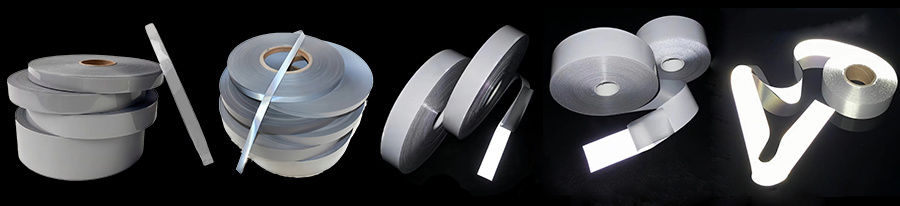
How to choose and maintain heat transfer reflective tape
As an experienced industry expert, YSM has accumulated a lot of practical experience in the field of heat transfer reflective tape. Here are some professional suggestions for purchase and maintenance.
Purchase suggestions
- Certification qualifications: Choose products with international certifications (such as ISO, CE) to ensure that the products meet safety standards.
- Product parameters: Pay attention to key parameters such as reflectivity, weather resistance, and temperature adaptability range. According to market data, high-end products usually have a reflectivity of more than 95% and a weather resistance of more than 5 years.
- Supplier reputation: Choose manufacturers with good reputation and good reputation, such as YSM, and verify their professional capabilities through field visits, customer reviews and other methods.
Maintenance suggestions
- Regular inspections: Check the adhesive area regularly. If the edge of the tape is loose or there are stains on the surface, it should be cleaned or replaced in time.
- Scientific cleaning: Use neutral detergent or alcohol to wipe, and avoid using highly corrosive solvents.
- Environmental adaptation: Different environments have different requirements for tapes. It is recommended to check the recommended temperature and humidity range in the product manual and strictly follow the standard operation.
Tool recommendation
- Hot air gun: Help local heating to improve the bonding effect of the tape.
- Scraper: Ensure that there are no bubbles when laminating to achieve a smooth effect.
- Precision cutting tools: Ensure accurate cutting dimensions to avoid pasting errors due to inconsistent dimensions.
Through these specific and feasible suggestions, readers can achieve scientific management during the purchase and maintenance process and improve the overall use effect of the product. YSM's professional data and practical experience also provide strong support for these suggestions.
Practical summary of improving the use effect of reflective tape
In summary, the correct use of heat transfer reflective tape requires not only understanding its basic principles, but also mastering the correct operating steps and maintenance skills. From cleaning, measuring, cutting, pasting to post-curing, each step is crucial.
In order to ensure the best effect, it is recommended that users carefully read the product instructions before use, operate according to the recommended tools, and regularly check and maintain the pasted area. For enterprises and individuals, purchasing certified and reputable products can effectively reduce safety hazards and improve the overall application experience. In actual operation, users should flexibly adjust the operation method according to different environments and needs to ensure that the expected effect can be achieved under various conditions.
In the future, with the continuous advancement of technology, the application scenarios of heat transfer reflective tape will become more and more extensive. As a professional manufacturer, YSM will continue to be committed to developing more efficient and environmentally friendly products to provide customers with professional and high-quality solutions. Whether in traffic safety, industrial production, or daily life, the scientific and reasonable use of heat transfer reflective tape can effectively improve safety and visual effects and create more value for society.
Related News

Reflective Webbing Factory: GB 8965 & Global Safety Standards
2026-10-08

Custom High Quality Luminous Film Factory
2026-09-09

Top 5 Flame Retardant Reflective Webbing Tape Manufacturer in Europe
2026-09-07
Messages
* Please be sure to leave your correct information so that we can contact you in time!
Contact us
Address: Wuli Industrial Zone, Jinjiang City, Fujian Province, China
Tel:+86 15980000890
E-mail:jerry@ysmlite.com
