

Why Are Safety Reflective Tape Brighter At Certain Angles?
2024-02-20
YSM
YSMLITE
In the middle of the night in the city, construction sites, roads, and cyclists shine brightly under the lights. Safety reflective tape is like an invisible guard, always reminding passing vehicles and passers-by. However, have you ever noticed that sometimes the reflective tape is particularly bright at certain angles, but sometimes it is dim? This is not only a problem of light reflection, but also related to our safety in dark environments.
The reflective safety clothing of traffic police and sanitation workers, as well as many outdoor sportswear, shoes and hats, have reflective strips. This is mainly to make it easier to be spotted by car drivers and ensure safety when there is insufficient light on rainy days or at night.
What is the principle of safety reflective tape?
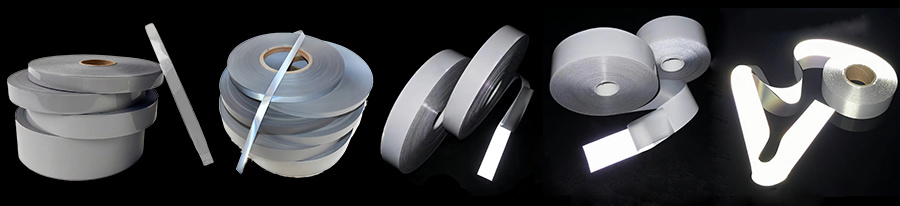
Hi vis tape for clothing does not emit light itself, nor does it emit fluorescence after being illuminated by light of a specific wavelength, such as ultraviolet light, like fluorescent materials. Instead, it directly reflects the light from the light source. However, this kind of reflective material does not simply and directly reflect the incident light like a mirror (unless the incident light is perpendicular to the mirror surface, there must be a large or small deviation in the direction of the reflected light and the incident light), but no matter what direction the incident light comes from , it can always reflect light back in the original direction. This phenomenon is called "retroreflection" or "retroreflection".
The basic principle of reflective fabric tape is the "retroreflection" phenomenon. Unlike ordinary object surfaces that reflect light in multiple directions, reflective materials reflect light back to the direction of the light source, making the light look brighter at night or in low light conditions. Especially when illuminated by vehicle lights or flashlights, reflective tape can instantly "light up" and provide a significant visual reminder.
Typically, reflective materials are composed of tiny glass beads or prismatic structures. When light hits these structures, it is effectively guided back to the original path, greatly enhancing visibility. This structural design is the secret of reflective tape's "glow" in dark environments.

Why is the reflective tape brighter at certain angles?
You may notice that when the light shines on the reflective tape from the front, it will be very bright; but when viewed from the side, the brightness is reduced. This is due to the "directional reflection" property of the reflective material.
The main influencing factors include:
- The relationship between the incident angle and the reflection angle: The core property of the reflective material is to reflect the incident light back to the original direction. When the angle of illumination is close to the observation angle, the brightness is the strongest. The more the angle deviates, the lower the brightness.
- Reflective material structure design: Different microbead arrangements or microprism structures affect the reflection angle. For example, a directional prism design can increase the brightness of the front, but may sacrifice the reflective performance at other angles.
- Surface smoothness and wearing form: If the reflective tape is bent, wrinkled or attached to an uneven surface, the reflection direction may deviate and the brightness may decrease.
This is why some reflective clothing, cycling vests or construction site clothes use multi-layer or multi-angle distributed reflective tapes to ensure good visibility from multiple directions.
Common reflective material types and reflective effect differences
Glass bead reflective material
One of the earliest reflective materials used. It is characterized by low cost, good softness, and suitable for sewing on clothing. However, its reflective efficiency is slightly lower than that of prismatic materials, especially at non-frontal angles.
Microprismatic reflective material
This material uses a series of extremely small prism structures to concentrate and reflect light. The reflective efficiency is much higher than that of glass bead type, and it is more weather-resistant. High-end manufacturers such as YSM often use this material in high-performance reflective products.
Hybrid reflective material
Combining the advantages of glass beads and prism design, it takes into account multi-angle reflection and manufacturing cost control. Suitable for scenes with high flexibility and medium-to-high performance requirements.
Special coating materials
Used for high-visibility workwear, professional mountaineering clothing or protective equipment in extreme environments, it has excellent weather resistance, waterproof, fire resistance and other properties, but the price is relatively high.
The choice of different materials determines whether the reflective brightness can cover a wider viewing angle. Especially in multi-directional lighting environments at night, prismatic materials usually perform better.
Test methods and professional tools for reflective brightness
Although we can judge whether it is bright or not with our naked eyes, professional measurements are more convincing, especially for manufacturers, wholesalers or clothing brands with purchasing needs. The following are common methods:
Visible light reflectivity meter
Measure the intensity of reflected light by setting a standard light source and an angle measuring instrument. This measurement can obtain a brightness value in the unit of "cd/lux/m²", which is a conventional method for evaluating the quality of reflective fabrics.
Incident angle-observation angle simulation test
Use professional equipment to simulate lighting and observation conditions at different angles to evaluate the brightness performance of reflective fabrics in multiple directions. This test result is closer to the actual wearing environment.
Outdoor vehicle illumination measurement method
Use vehicle lights to compare the brightness of reflective materials of different batches or brands at night, and record the brightness difference observed by naked eyes. This method is simple but relies on subjective judgment and is suitable for preliminary screening on site.
Through these tests, you can not only intuitively understand the performance of reflective materials, but also make purchasing or selection decisions with more confidence.
How to choose the right reflective tape according to the usage scenario?
It is not a simple matter to buy reflective tape. The scenario determines the demand, and the demand determines the material selection and design.
Daily cycling, jogging and other light use
It is recommended to use glass bead reflective materials, which take into account comfort and basic safety. Choose high-density webbing styles that fit clothing without affecting activities.
Professional environments such as construction site operations and traffic guidance
Microprismatic reflective materials should be preferred, which are wear-resistant and waterproof, with higher brightness, and can ensure safety under complex lighting conditions.
Operations in extreme climate environments
Such as heavy rain, snow, and fire, it is recommended to use composite flame-retardant and cold-resistant reflective materials provided by brands such as YSM to ensure functional integrity.
Branded clothing, personalized customization needs
You can choose reflective tapes with strong visual effects such as colorful reflective, pattern reflective, and rainbow reflective, taking into account both fashion and safety.
Don't be greedy and buy unbranded and uncertified reflective tapes, which will not only affect the service life, but may also fail at critical moments.
Practical tips: How to enhance the reflective effect?
Even if you have high-quality reflective materials, the wrong way of using them will make them "lose their luster". Here are some tips to enhance the reflective effect:
- Keep the reflective tape clean: dust and oil stains will greatly reduce the reflective brightness. You can wipe it gently with a damp cloth regularly to avoid strong alkaline detergents corroding the material.
- Avoid frequent folding of reflective areas: Especially for micro-prismatic materials, long-term bending will destroy its structure and affect the reflective performance.
- Reasonable matching of reflective areas: Arrange reflective tapes on high-brightness parts of the human body (such as the chest, arms, and back) to improve recognition.
- Combination use: In high-risk environments, it is recommended to combine reflective clothing, backpacks, shoelaces and other reflective accessories to make the whole body visible from multiple angles.
- Choose qualified brand products: Professional manufacturers such as YSM usually pass international certifications such as EN20471 and ANSI, and their quality is guaranteed.
Through these daily use details optimization, you can significantly improve the safety protection of reflective products in actual use.
The brightness of light is not only determined by its strength, but also by whether it is "back". The reason why safety reflective tape can be brighter at certain angles is because the scientific structural design matches the precise application environment. Understanding this knowledge will not only help you be more professional in product selection, but also truly protect the safety of yourself and others in actual life and work.
Choosing high-quality reflective materials is an investment in safety; using reflective materials correctly is a respect for life. May every wear become an extension of light in the dark, and let every step shine with a reassuring brightness.
Related News

Reflective Webbing Factory: GB 8965 & Global Safety Standards
2026-10-08

Custom High Quality Luminous Film Factory
2026-09-09

Top 5 Flame Retardant Reflective Webbing Tape Manufacturer in Europe
2026-09-07
Messages
* Please be sure to leave your correct information so that we can contact you in time!
Contact us
Address: Wuli Industrial Zone, Jinjiang City, Fujian Province, China
Tel:+86 15980000890
E-mail:jerry@ysmlite.com
