

Standards for Measuring High Quality Flame-Retardant Reflective Tape
2024-08-14
YSM
ysmlite.com
YSM fire resistant reflective tape is highly respected for its excellent performance and reliable quality, and has become the preferred material for various protective clothing manufacturers. As a top flame retardant reflective tape manufacturer, we are committed to providing efficient, safe and reliable reflective solutions.
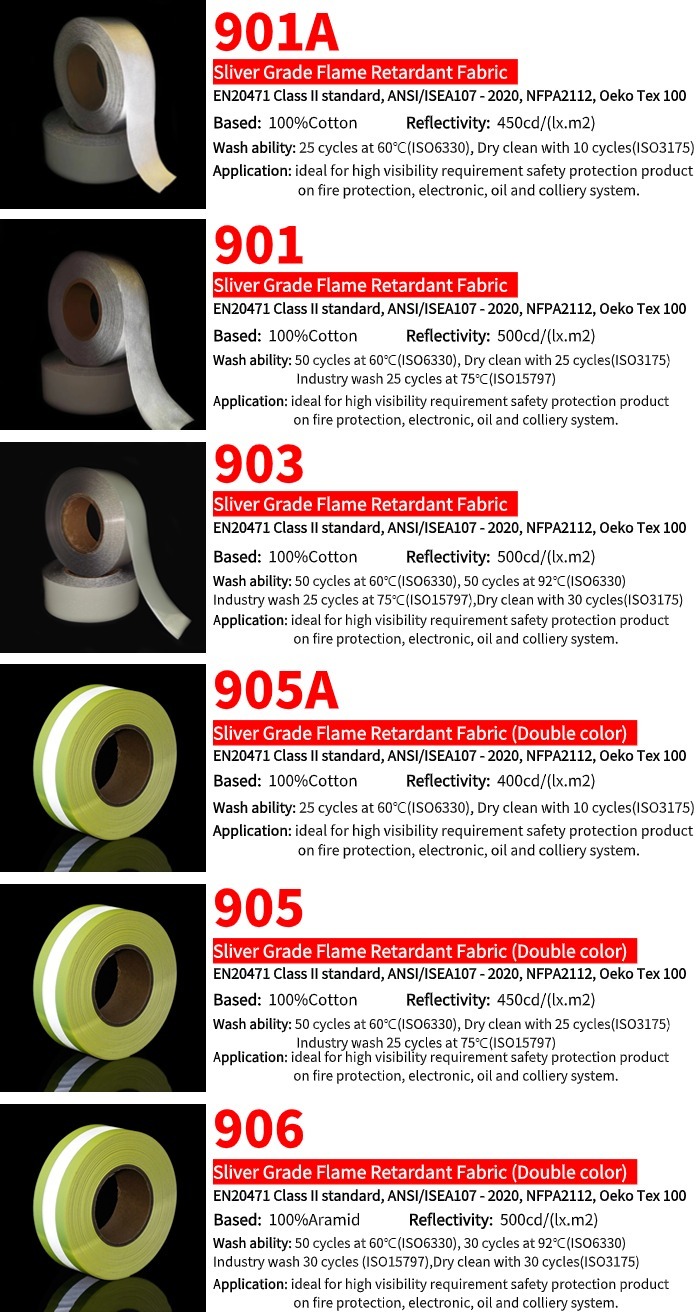
Raw materials and formula design
Raw materials selection and flame retardant system construction
- Polymer matrix selection: High-performance flame retardant reflective tapes are usually based on high temperature and chemical corrosion resistant polymers, such as cotton or polysiloxane. High-quality matrix not only determines the basic mechanical strength and weather resistance of the tape, but also directly affects the dispersion and synergy of flame retardants.
- Types and ratios of flame retardants: Commonly used flame retardants include halogen-free flame retardants (such as phosphorus and nitrogen) and low-smoke halogen-free flame retardants. By optimizing the ratio and synergistic enhancement, the material can meet the UL94 V-0 or higher standards without affecting the overall physical and mechanical properties.
- Addition of reflective particles: The quality of the reflective effect mainly depends on the uniform distribution and particle size control of the particles (such as glass beads and micro-reflective sheets) in the matrix, and the reflectivity must be ensured to meet the values required by ASTM D4956 or ISO 10678.
Advanced testing of formulations
- Fourier transform infrared spectroscopy (FTIR): used to detect the chemical bonding between polymers and flame retardants, ensuring that the flame retardant is evenly dispersed in the matrix and does not fail due to chemical reactions.
- Differential scanning calorimetry (DSC) and thermogravimetric analysis (TGA): Through thermal analysis technology, the thermal stability and decomposition temperature of the material at different temperatures are studied to ensure that the material can quickly form a protective layer and delay combustion at the initial stage of the fire.
Production technology and process control
Precision production equipment and process parameters
- Equipment automation and online monitoring: Use advanced automated production lines to achieve precise control of parameters such as temperature, pressure, speed and curing time to ensure the consistency and stability of each batch of products.
- Mixing and extrusion technology: Use high shear mixing technology to fully mix flame retardants, reflective particles and base materials, and through precision extrusion molding, ensure that the internal structure of the material is uniform and free of bubble defects.
Production process data traceability
- Full data recording and traceability management: According to the requirements of the ISO 9001 quality management system, various key parameters in the production process are recorded and monitored to ensure that product quality is traceable and provide data support for subsequent improvements.
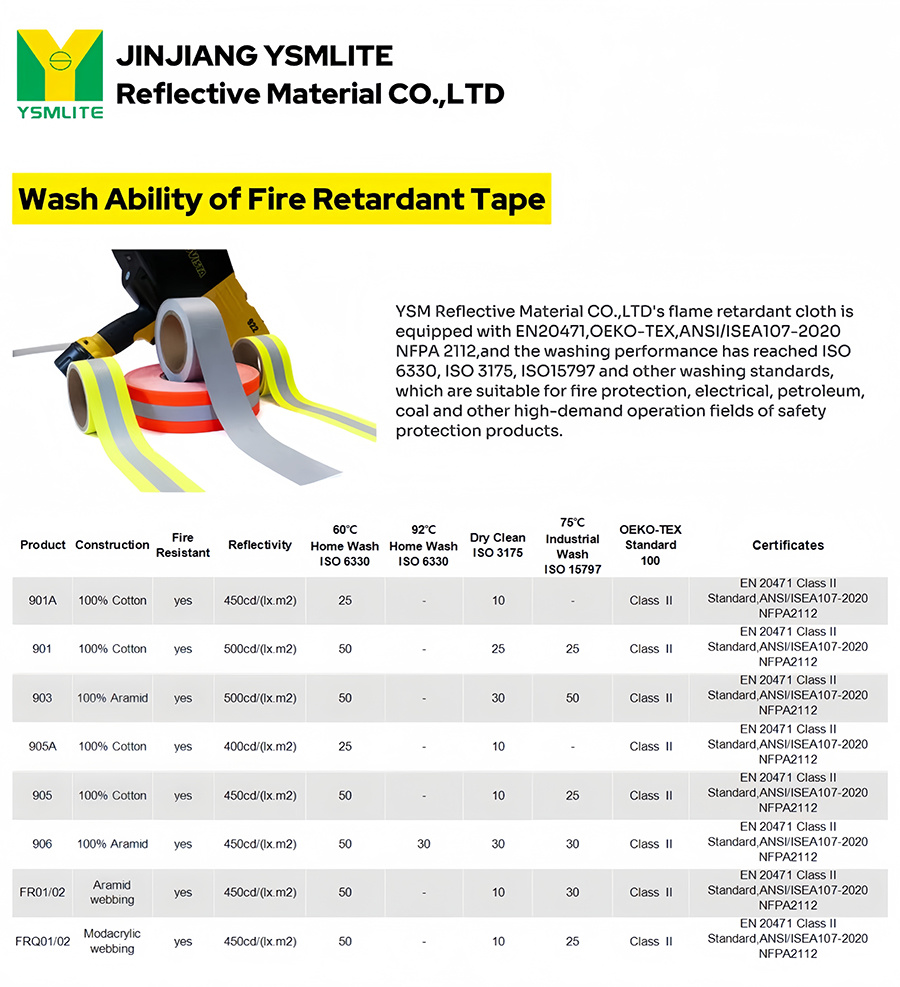
Flame retardant performance and fire test
Main flame retardant test standards
- UL94 vertical burning test: As a global flame retardant grade test standard, UL94 requires that materials can quickly self-extinguish under the action of flames and do not produce dripping combustion products. High-quality products should reach V-0 level, reflecting rapid extinguishing and flame retardant continuity.
- EN 13501 series fire classification standards: widely used in the European market, not only consider the speed of combustion spread, but also involve parameters such as smoke density, flame temperature and toxic gas release. Products that reach A1 or A2 level are considered to have excellent comprehensive fire protection performance.
Auxiliary testing methods
- Self-extinguishing time and smoke density test: The self-extinguishing time of the material after the fire source is removed is evaluated through a standardized test device, and the emission of smoke and toxic substances during the combustion process is detected to provide safety data for actual fire scenes.
- Microstructure analysis: The carbonized layer structure on the surface of the material after combustion is observed using a scanning electron microscope (SEM) to analyze whether the protective layer formed in the flame retardant mechanism is dense and uniform, thereby improving the overall fire protection performance.
Reflective performance and weather resistance requirements
Reflective effect test
- Reflectivity measurement: According to ASTM D4956 or ISO 10678 standards, the reflectivity of the reflective tape is measured at different angles and different lighting conditions using an integrating sphere and a spectrometer. High-quality products should still maintain a reflectivity of more than 85% in low-light environments.
- Color uniformity and viewing angle stability: Through colorimeter detection, ensure the color consistency of the product between production batches and during long-term use; at the same time, multi-angle lighting tests are carried out to verify that the reflective effect does not decay at different viewing angles.
Weather resistance and aging test
- Environmental aging test: Including multiple environmental simulation tests such as high temperature, low temperature, ultraviolet radiation, and wet heat cycle to detect the changes in the physical and chemical properties of the product after long-term exposure to outdoor environments.
- Chemical corrosion resistance: Test the stability of the product surface adhesive layer and reflective layer under acid, alkali, salt spray and other conditions to ensure that it still has high adhesion and reflective performance in extreme environments.
Environmental protection, safety and health certification
Chemical composition and environmental protection requirements
- ROHS and REACH certification: Ensure that the product does not contain heavy metals and organic pollutants that are harmful to the human body and the environment during the selection of raw materials and the production process, and complies with EU and international environmental regulations.
- Low smoke and halogen-free standard: Under fire conditions, the product should exhibit low smoke, low toxicity, and halogen-free characteristics to reduce secondary damage to the human body, and is often certified through corresponding national standards (such as GB/T 2408).
Consumer safety and health testing
- Volatile organic compound (VOC) testing: Through strict testing methods, ensure that the tape will not release excessive VOCs during production, storage and use, creating a healthy and safe working and living environment for users.
- Long-term contact safety assessment: Combined with material biocompatibility testing, evaluate the potential safety hazards and allergy risks that may arise during long-term contact (such as traffic and public safety sign applications).
Quality management system and certification
Enterprise-level quality management
- ISO 9001 quality management system: Through continuous improvement, risk assessment and customer feedback mechanisms, achieve full-process quality monitoring from raw material procurement, production process to finished product testing to ensure product quality and consistency.
- ISO 14001 Environmental Management System: Establish a sound system in energy conservation and emission reduction, waste treatment and environmental monitoring, comply with green production standards, and enhance the corporate social responsibility image.
Product certification and industry recognition
- CE certification: For products entering the European market, the CE mark not only proves that the product meets the EU safety, health, environmental protection and consumer protection requirements, but also symbolizes product performance and reliability.
- Specific industry certification: In the application fields of transportation, construction, industrial fire protection, etc., products need to obtain special certification from relevant departments (such as the Ministry of Transport, Building Fire Protection Association), which often include strict on-site testing and laboratory verification.
Related News

Reflective Webbing Factory: GB 8965 & Global Safety Standards
2026-10-08

Custom High Quality Luminous Film Factory
2026-09-09

Top 5 Flame Retardant Reflective Webbing Tape Manufacturer in Europe
2026-09-07
Messages
* Please be sure to leave your correct information so that we can contact you in time!
Contact us
Address: Wuli Industrial Zone, Jinjiang City, Fujian Province, China
Tel:+86 15980000890
E-mail:jerry@ysmlite.com
