

How to Properly Store Fire Retardant Reflective Tape?
2024-08-09
YSM
ysmlite.com
| Table of Contents |
2. Environmental control measures 3. Specific storage operation steps 4. Daily management during storage |

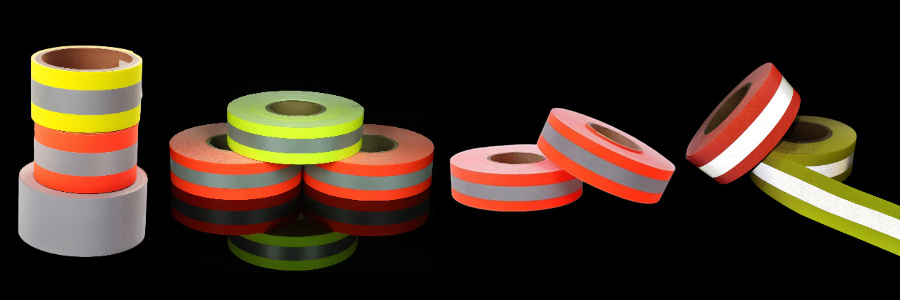
As the world's leading flame retardant reflective tape supplier, YSM is well aware of the important factors that customers need to consider when choosing products. We not only have significant advantages in product technical parameters, but also lead the industry in production processes, quality control and innovation capabilities.
Fire retardant reflective tape are not only required to have long-term stable flame-retardant properties, but also to maintain excellent adhesion and reflective effects during long-term storage. Any improper storage conditions may cause the performance of the tape to deteriorate, and even affect the safety and reliability of the final application. Therefore, it is crucial to establish a scientific storage management system.
Preliminary preparation
Evaluation and planning
- Inventory statistics: Count the current inventory quantity, specifications and batches, and understand the characteristics and storage requirements of different products.
- Warehouse layout planning: Determine the warehouse area division according to the inventory, and plan the layout of temperature and humidity monitoring points, moisture-proof facilities and fire-fighting equipment in advance.
Warehouse equipment and environmental testing
- Temperature and humidity detector: Configure accurate temperature and humidity detection instruments to ensure that environmental data can be monitored in real time.
- Ventilation system inspection: Check whether the ventilation equipment is operating normally to ensure that there are no dead corners in air circulation.
- Moisture-proof facilities: Prepare dehumidifiers, moisture-proof mats and waterproof sealing bags to ensure that the interior of the warehouse is dry.
Environmental control measures
Temperature management
- Set the ideal temperature: Adjust and maintain the warehouse temperature between 15℃ and 25℃.
- Temperature monitoring: Install thermometers at multiple key points in the warehouse and record temperature changes every day. If the temperature is abnormal, find the cause immediately (such as air conditioning failure, external climate change, etc.) and make timely adjustments.
Humidity control
- Set target humidity: Control the relative humidity at 40% to 60% through air conditioning or dehumidification equipment.
- Check humidity regularly: Record humidity data at least twice a day, and set up an automatic alarm system to start dehumidification measures when the humidity exceeds the set upper limit.
Lighting control
- Anti-ultraviolet measures: Install blackout curtains or use anti-ultraviolet glass to ensure that the warehouse is not directly exposed to strong sunlight.
- Lighting adjustment: Use soft and indirect lighting to ensure the working environment in the warehouse and avoid strong light from accelerating the aging of tape materials.
Ventilation and air circulation
- Timed ventilation: Turn on the ventilation equipment regularly every day to keep air circulation; if the warehouse is large, ventilation equipment can be set up in different areas.
- Air purification: If conditions permit, air purifiers can be installed to reduce the impact of dust and microorganisms on the tape.
Specific storage operation steps
Receiving and acceptance
- Goods inspection: After receiving the goods, the outer packaging, labeling and moisture-proof sealing of the product should be checked immediately, and the production date and batch information should be recorded.
- Product testing: Some products are sampled to test whether the viscosity, flame retardancy and reflective effect meet the standards. If there is any abnormality, feedback should be given to the supplier immediately.
Classification and labeling
- Product classification: Products are classified according to specifications, batches and uses, and stored separately.
- Clear labeling: Each type of product should be clearly labeled, including product name, production date, shelf life and storage requirements.、
- Electronic management: It is recommended to use a warehouse management system (WMS) to enter detailed information to achieve electronic and dynamic management.
Packaging and protection
- Keep the original packaging: Try to keep the original packaging of the manufacturer to ensure its moisture-proof and dust-proof properties.
- Secondary packaging: For products that are stored for a long time, a moisture-proof sealed bag or dust cover can be added to the original packaging.
- Fixed bundling: If products need to be stacked, use appropriate bundling tools (such as straps, wooden partitions) to ensure that the products are flat and avoid sliding and heavy pressure.
Stacking and storage
- Horizontal placement: Place the tape rolls flat on the shelf to avoid bending or uneven force.
- Avoid high stacking: Set a reasonable stacking height according to the weight of the product to ensure that the lower layer of products is not squeezed and deformed.
- Special shelves: Use customized moisture-proof shelves or anti-static shelves to reduce moisture or static electricity problems caused by direct contact with the ground.
Warehouse records and management
- Detailed records: When each batch of products enters the warehouse, detailed information must be recorded in the warehouse management system, including storage location, temperature and humidity monitoring data, and warehouse entry time.
- First-in-first-out (FIFO) principle: Establish strict outbound rules to ensure that the first products in the warehouse are used first, reducing the aging risk caused by long-term storage.
Daily management during storage
Regular environmental inspections
- Daily inspections: Designate a dedicated person to inspect the warehouse every day, focusing on the operation of temperature and humidity, lighting, moisture-proof equipment and fire-fighting facilities.
- Data Recording: Record daily environmental monitoring data in detail to facilitate tracking changes and analyzing trends.
Regular Product Inspection
- Periodic Testing: Inspect a batch of products every month to test viscosity, flame retardancy and reflective effects to ensure that the products can still meet the use requirements after long-term storage.
- Recording and Feedback: The test results are recorded. If abnormalities are found, adjust the storage environment or arrange product updates in time.
Cleaning and Maintenance
- Warehouse Cleaning: Regularly clean the warehouse thoroughly to remove dust, debris and other factors that may contaminate the product.
- Equipment Maintenance: Regularly inspect air conditioners, dehumidifiers, ventilation equipment, etc. to ensure the normal operation of the equipment and prevent the environment from being out of control due to equipment failure.
Prevention and Treatment of Common Problems
Decreased adhesive tape viscosity
- Prevention: Strictly control temperature and humidity, and regularly check the integrity of product packaging.
- Treatment: If the viscosity decreases, first check whether it is caused by environmental factors; if the environment is confirmed to be qualified, consider changing the product batch or contacting the manufacturer.
Aging of materials and weakened reflective effect
- Prevention: Avoid long-term direct exposure to ultraviolet rays and use anti-ultraviolet packaging.
- Treatment: When the material is found to be aging, the product should be stopped from being shipped out, and performance testing should be carried out. If necessary, professional treatment or destruction should be carried out.
Moisture causes mold or blistering
- Prevention: Configure and regularly check moisture-proof equipment to keep the warehouse dry; ensure that the packaging is intact.
- Treatment: For products that have been damp, dry them as appropriate; if the quality is seriously degraded, it is recommended to scrap them to ensure safe use.
Subsequent maintenance and shelf life management
Shelf life management
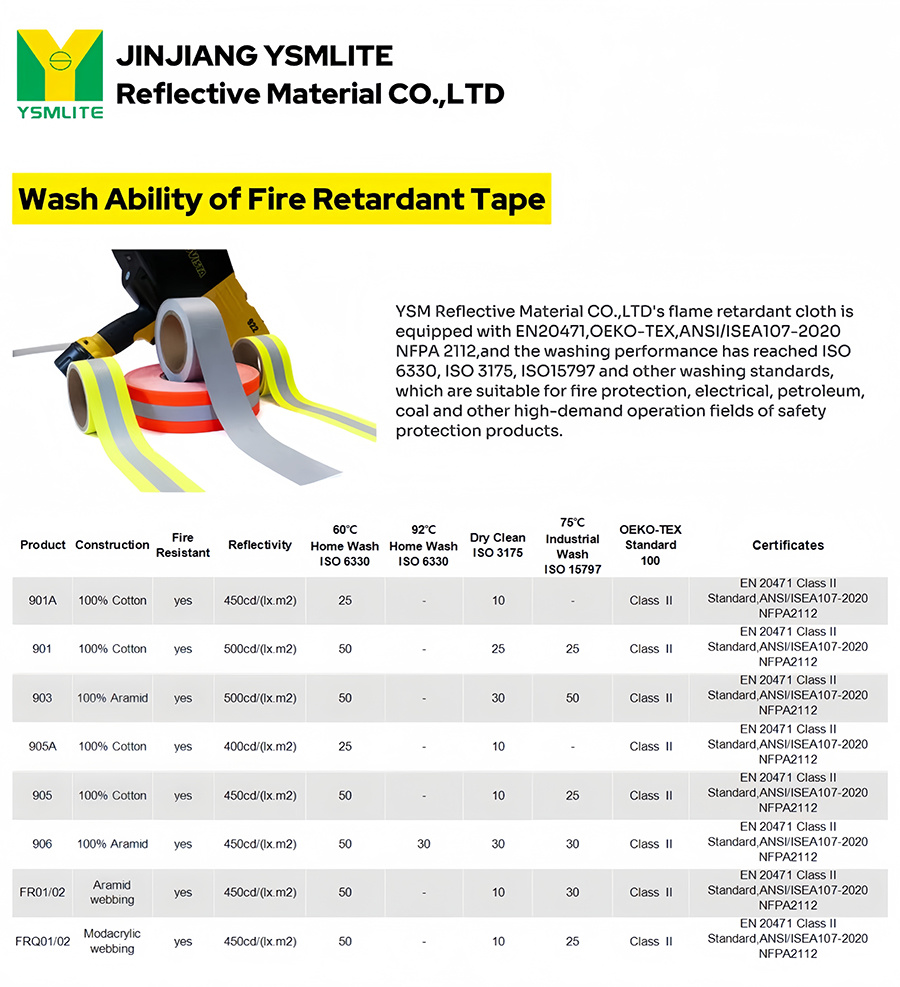
- Standard shelf life: Under ideal storage conditions, flame-retardant reflective tape generally has a shelf life of 3 to 5 years. Please refer to the product instructions for details.
- Dynamic management: Combined with actual test data, dynamically manage the service life of inventory products and plan shipping updates in advance.
Suggestions for extending the shelf life
- Environmental data monitoring: Use an intelligent monitoring system to collect and analyze temperature and humidity data in real time, and warn of abnormal conditions in a timely manner.
- Packaging technology upgrade: Continue to pay attention to the application of new moisture-proof and UV-proof materials, and upgrade and transform existing packaging.
- Periodic maintenance: Combined with the results of product sampling, formulate regular maintenance and maintenance plans to ensure the stability of inventory products.
Through systematic preliminary preparation, environmental control, strict warehousing operations, daily management and regular testing, not only can the original performance of flame-retardant reflective tape be maintained to the maximum extent, but also its shelf life can be effectively extended. Enterprises should continuously optimize and adjust storage plans according to actual conditions, establish a complete warehouse management system, and ensure that each batch of products can be stored in a safe and reliable environment, so as to provide customers with high-quality and high-security product solutions.

Related News

Reflective Webbing Factory: GB 8965 & Global Safety Standards
2026-10-08

Custom High Quality Luminous Film Factory
2026-09-09

Top 5 Flame Retardant Reflective Webbing Tape Manufacturer in Europe
2026-09-07
Messages
* Please be sure to leave your correct information so that we can contact you in time!
Contact us
Address: Wuli Industrial Zone, Jinjiang City, Fujian Province, China
Tel:+86 15980000890
E-mail:jerry@ysmlite.com
