

How To Get UL Certification for FR Reflective Tape
2025-03-05
Ysmlite
ysmlite.com

UL (Underwriters Laboratories) certification is one of the most authoritative safety certifications in the world. Especially in terms of fire safety and performance testing, its standards are extremely strict to ensure that the product can provide the necessary safety in high-risk environments. For flame retardant reflective tape, obtaining UL certification is not only an endorsement of quality and safety, but also means that the product has passed a series of rigorous tests to ensure that it can provide the best protection in actual use.
The core significance of UL certification for flame retardant reflective tape
UL certification is not only an endorsement of product quality, but also a systematic verification of product safety throughout its life cycle. For flame retardant reflective tape, UL certification focuses on verifying the following capabilities:
- Flame retardant performance: UL 94 (plastic material flammability test) is used to evaluate the self-extinguishing property of the material under open flame to ensure that the spread of flames is delayed in fire.
- Reflective performance: Comply with ASTM D4956 standard, verify the retroreflection coefficient (RA value) and wide-angle visibility, and ensure the warning effect in low-light environments.
- Environmental tolerance: Test weather resistance, chemical corrosion resistance and aging resistance through UL 746C (Long-term performance evaluation of polymer materials).
- Electrical safety: For industrial scenarios, verify the insulation performance and arc resistance of the tape in an electrically charged environment (if applicable).

UL certification process
The UL certification process is comprehensive and multi-stage, covering all aspects from raw material selection to the final product. For fire retardant reflective tape, obtaining UL certification must go through the following key steps:
Materials and preliminary evaluation
The first step of UL certification is to evaluate the raw materials of flame-retardant reflective tape. UL engineers will conduct a detailed analysis of the constituent materials of the tape to confirm whether they meet its strict fire protection standards. In particular, the selection of flame-retardant substrates must meet UL's requirements for pyrolysis and combustion performance.
Substrate selection and testing: Flame-retardant reflective tapes usually use flame-retardant coating materials or flame-retardant fibers, such as Aramid or flame-retardant polyester. These materials must pass specific tests, such as pyrolysis tests and burning rate tests, to ensure that they can quickly suppress the spread of flames in a fire.
Sample Testing and Laboratory Verification
Once the appropriate raw materials have been selected and the initial evaluation has been carried out, UL will require a series of rigorous laboratory tests. The purpose of these tests is to verify the various properties of flame retardant reflective tapes, especially the reaction under high temperature and fire environments. Common test items include:
Flame retardant performance test (UL 94)
Vertical burning test (VTM grade):
The tape sample is hung vertically in a specific combustion box, and a methane flame (20mm height) is used to burn the bottom of the sample for 10 seconds, and the following data is recorded:
- After Flame Time: After the flame is removed, the material continues to burn for ≤30 seconds (VTM-2 grade) or ≤10 seconds (VTM-0 grade).
- Droplet ignition: Whether the molten droplets that ignite the cotton pad below are generated during the combustion process.
- Technical points: The addition ratio of flame retardants (such as aluminum hydroxide and phosphorus flame retardants) needs to accurately balance the flame retardant effect and the flexibility of the tape.

Reflective performance test
UL certification not only focuses on flame retardant performance, but also conducts rigorous testing on reflective performance to ensure that the tape can provide sufficient visibility in low-light environments. Reflective performance is one of the core functions of flame-retardant reflective tape and must meet the following standards:
- Reflectivity: UL requires that the reflectivity of flame-retardant reflective tape must reach a specific value (usually above 200 cd/lux·m²) to ensure its reflective effect at night or in dim conditions.
- Multi-angle reflective ability: In addition to standard vertical reflection, UL testing also covers the reflective performance of the tape at multiple angles to ensure that the reflective effect is always maintained in a sufficient range regardless of how the user moves.
- Wide-angle visibility: Verify the wide-angle reflective efficiency of the micro-prismatic structure of the reflective layer at a 30° observation angle to ensure a multi-directional warning effect.
Environmental tolerance test (UL 746C)
- Heat aging test: Place the sample in a high-temperature box at 105°C for 168 hours, and the tensile strength decay after the test must be ≤20%.
- UV aging test: Use QUV accelerated aging equipment to simulate outdoor exposure (UVA-340 lamp, 0.76W/m² irradiance), and the peel strength of the reflective layer must be ≥3.0 N/cm after 1000 hours of testing.
- Chemical corrosion resistance test: After immersion in 5% hydrochloric acid, diesel and other media for 24 hours, the adhesive force of the tape must maintain more than 80% of the initial value.
Mechanical properties and durability test
Flame retardant reflective tape must not only have good reflective properties in actual use, but also have sufficient wear resistance, weather resistance and durability. These properties directly affect the life and use of the product. UL certification will evaluate the performance of the tape in long-term use through a series of mechanical properties and durability tests.
- Tensile and wear resistance test: Through standard tensile tests, check the toughness and fracture resistance of the tape after being stretched by external force. At the same time, test its wear resistance under long-term friction conditions to ensure that the reflective tape will not fall off or be damaged during frequent use.
- Weathering test: UL also requires the tape to maintain its performance under extreme climatic conditions, including high temperature, low temperature, humidity, ultraviolet light, etc. Accelerated aging test verifies whether the tape can maintain flame retardant and reflective functions under long-term exposure to sunlight and humid environment.
Electrical safety test (UL 510)
- Insulation withstand voltage test: 3000V AC voltage is applied to both sides of the tape for 1 minute, and there is no breakdown or leakage current>5mA phenomenon.
- Anti-arc test: simulate arc discharge (current 20A, voltage 240V), and no carbonization or conductive path should be generated on the surface of the tape.
Production quality control and continuous monitoring
After obtaining UL certification, the production process of flame retardant reflective tape will enter the continuous monitoring stage. UL requires manufacturers to establish a complete quality control system to ensure that each batch of products meets the certification standards. Common quality control requirements include:
- Production process monitoring: UL requires manufacturers to strictly monitor the production process, including the procurement of raw materials, the setting of production lines, the manufacturing and post-processing of tapes, etc., to ensure that each batch of reflective tapes can meet the UL certification standards.
- Regular inspection and sampling inspection: UL will also conduct on-site inspections and product sampling from time to time to ensure that every link in the production process meets the certification requirements and continuously monitors the consistency and quality of the products.

Key nodes of UL certification application process
- Material pre-examination: Submit the MSDS (chemical safety data sheet) and formula ratio of the substrate (PET/glass fiber), flame retardant, and reflective microbeads (glass or ceramic material) to ensure that they do not contain UL banned substances (such as hexabromocyclododecane).
- Sample preparation: Tape samples produced in the same batch (width ≥50mm, length ≥3m) must be provided, accompanied by process documents such as production batch number and thickness tolerance (±0.05mm).
- Factory review: UL engineers conduct on-site audits of the flame retardant mixing uniformity, coating accuracy (glue layer thickness error ≤ 5μm), slitting process, etc. of the production line to ensure consistency in mass production.
- Certification maintenance: UL conducts surprise factory inspections every year and randomly selects products on the market for retesting. Enterprises must keep at least 5 years of production records for review.
Key requirements and technical standards for UL certification
The key requirements for UL certification include compliance with multiple technical standards for fr reflective tape, especially in the following aspects:
Flame retardant performance standards
UL requires that flame retardant reflective tapes must be able to quickly self-extinguish in standard flame exposure tests and ensure that the flame propagation speed does not exceed the set standard. Common related standards include:
- UL 94: UL 94 is a flame retardant standard for plastic materials, which tests how the material burns and extinguishes after being exposed to a fire source. The base material of flame retardant reflective tape must meet the requirements of UL 94.
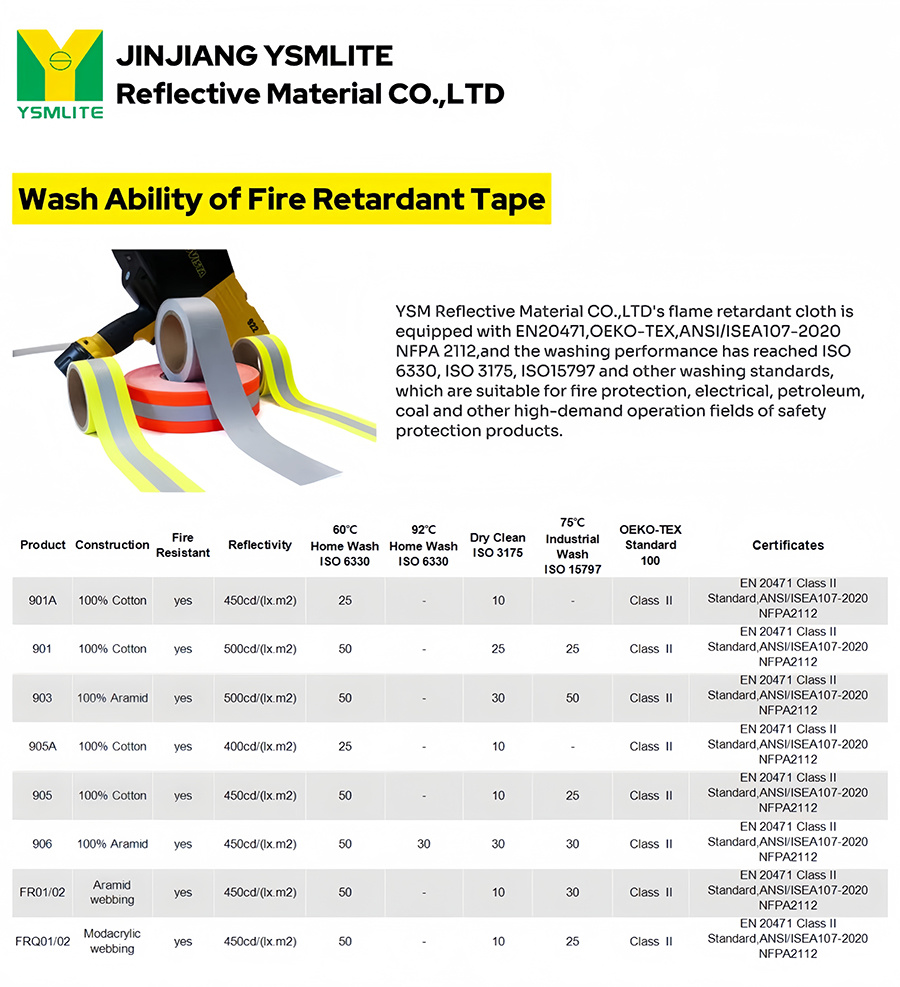
- UL 2112: This is a certification standard specifically for fire-resistant clothing and reflective materials, requiring products to provide basic protection and quickly extinguish in the event of a fire.
Reflective performance standards
UL certification requires that the reflective performance of flame-retardant reflective tapes meet the following standards:
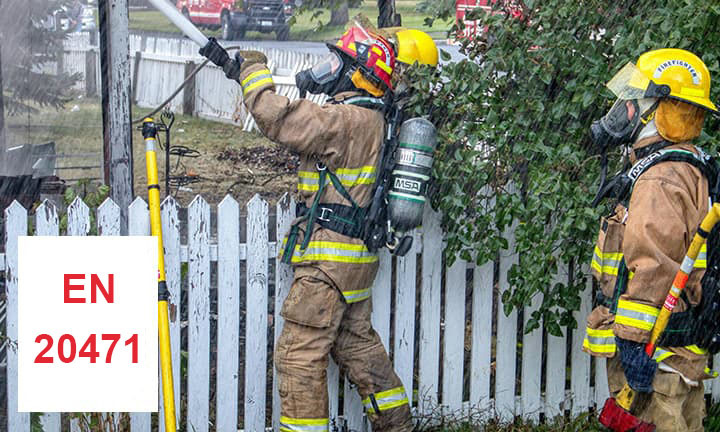
- ISO 20471: A widely adopted international standard for reflective clothing that specifies the reflective coefficient requirements for reflective materials under different lighting environments.
- ANSI/ISEA 107: The U.S. standard for reflective clothing specifies the reflective performance, visibility, and reflection angle requirements of reflective materials.
Through these detailed technical requirements and strict certification processes, fireman reflective tapes can ensure their performance in extreme environments and provide users with reliable safety protection.
UL-certified flame-retardant reflective tapes are essentially the product of a deep integration of material science, process control, and safety engineering. Buyers need to deeply understand the technical logic behind the certification and establish a systematic evaluation framework from dimensions such as substrate selection, flame-retardant system design, and environmental adaptability in order to screen out truly compliant, long-lasting, and reliable safety protection products in a complex supply chain.
Related News

Reflective Webbing Factory: GB 8965 & Global Safety Standards
2026-10-08

Custom High Quality Luminous Film Factory
2026-09-09

Top 5 Flame Retardant Reflective Webbing Tape Manufacturer in Europe
2026-09-07
Messages
* Please be sure to leave your correct information so that we can contact you in time!
Contact us
Address: Wuli Industrial Zone, Jinjiang City, Fujian Province, China
Tel:+86 15980000890
E-mail:jerry@ysmlite.com
