

What Are The Differences Colors of Flame Retardant Reflective Tapes?
2025-02-19
Ysmlite
ysmlite.com
Flame retardant reflective tape is an indispensable component of many fire protection and safety equipment, and is widely used in fire protection, engineering, transportation and other industries. Its unique reflective properties and flame retardant properties make it an important tool for ensuring personnel safety, improving visibility and reducing the risk of accidents. However, when many customers choose and purchase flame retardant reflective tape, they know little about the functions, uses and differences of reflective tapes of different colors.
Basic Concepts of Flame Retardant Reflective Tape
Fire retardant reflective tape is made of special reflective materials and flame retardant substrates. This tape can provide high reflectivity in low light environments, ensuring the visibility of users at night or in low visibility conditions, thereby reducing the risk of accidents. At the same time, the flame retardant properties enable it to remain stable in high temperature environments to prevent the spread of fire.

Color selection and influence of flame retardant reflective tape
The color of fr reflective tape is not only for beauty or identification, it directly affects its use effect in different environments. Common colors of flame retardant reflective tape include red, yellow, white, blue, etc. Each color has different visual effects and functionality. The selection should be based on the specific application scenario.
Red reflective tape
Red is usually used as a sign for high-risk areas or emergency passages. Red reflective tape has high visibility at night or in low light environments, and can effectively remind people to stay away from dangerous areas. In addition, red is closely related to concepts such as fire, danger, and emergency, and is a common warning color in the fire protection industry.
Application scenarios:
- Firefighting equipment and tools
- Fire alarm system
- Emergency evacuation instructions
Yellow reflective tape
Yellow reflective tape is one of the most common warning colors and is widely used in construction sites, traffic signs, and industrial equipment. Yellow has a strong warning effect. When used with reflective materials, it can quickly attract attention under low visibility conditions and avoid accidents caused by unclear vision.
Application scenarios:
- Construction sites
- Traffic safety signs
- Industrial production equipment
White reflective tape
White reflective tape has a strong reflective effect and is often used in places where high reflectivity and clear visual effects are required. Compared with other colors, white has more outstanding reflective performance and can provide more effective warnings in poor light environments.
Application scenarios:
- Reflective clothing
- Parking lot signs at night
- Safety signs for highways or tunnels
Blue reflective tape
Blue reflective tape is usually used to identify non-emergency and non-high-risk areas. It has a lower warning intensity, but in some places where different functional areas need to be distinguished, blue is a very suitable choice. Blue is often used in reflective tape to distinguish and identify staff, indication areas or non-emergency materials.
Application scenarios:
- Work area identification
- Equipment maintenance and marking
- Non-emergency safety tips
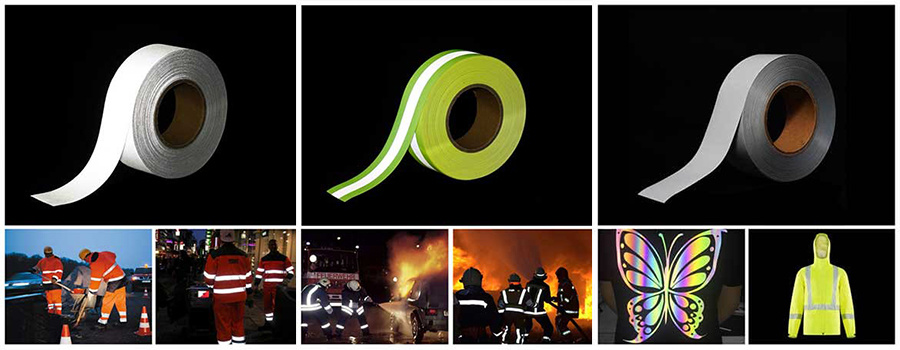
The impact of flame retardant reflective tape color on safety
Choosing the right color of fireman reflective tape is not only to improve visibility, but also closely related to safety. The right color can ensure that attention is quickly attracted in an emergency and guide people away from danger.
- Improve visibility: Different colors have different reflective effects under different lighting conditions. For example, red and yellow can provide higher visibility at night or in dim environments, effectively guiding people to avoid dangerous areas.
- Symbolic application: Each color has its specific meaning. For example, red is usually associated with urgency and danger, while yellow is associated with warnings and attention. Choosing the right color can ensure that users can quickly identify hazard signs in emergency situations.
- Adaptation to different environments: Different working environments and application scenarios will also affect color selection. For example, construction sites may be more suitable for yellow reflective tape, while traffic signs may require more red and white reflective tape.

How to choose the right flame retardant reflective tape color according to needs
When choosing flame retardant reflective tape, buyers and fire safety personnel should decide the color based on the following factors:
- Application scenario: Choose the appropriate color according to the specific use environment. For example, use yellow on construction sites and red on fire equipment.
- Warning needs: If you need to attract attention in an emergency, it is recommended to choose red or yellow; if you need a high reflective effect, you can choose white.
- Industry standards and specifications: Different industries may have different color specifications, make sure to follow the relevant safety sign requirements.
The color selection of flame retardant reflective tape not only affects the appearance, but also determines its effect and function in different environments. Whether it is fire safety, construction, or traffic management, choosing the right color can improve safety while ensuring quick attention in an emergency. Understanding the differences in reflective tapes of different colors can help fire safety personnel and buyers make wise choices and provide more efficient and safer protection for the working environment.
If you have more needs or questions about flame retardant reflective tape, please contact us for more product information, we will provide you with professional product solutions.
Related News

Glow in the Dark Film Guide: Comparing Acrylic, Pvc, and Pet Materials
2026-10-14

UL FR Reflective Tape: Standards, Applications, and Best Uses
2026-10-12

Reflective Webbing Factory: GB 8965 & Global Safety Standards
2026-10-08
Messages
* Please be sure to leave your correct information so that we can contact you in time!
Contact us
Address: Wuli Industrial Zone, Jinjiang City, Fujian Province, China
Tel:+86 15980000890
E-mail:jerry@ysmlite.com
